Thursday, November 29, 2012

From Triad to Dyad: Rationalizing U.S. Nuclear Weapons Delivery Systems

One of the big areas of contention during the presidential election was the issue of military spending. How much should the U.S. be spending on the military? Where does the military fall on the list of priorities for the United States?

Christopher A. Preble, the vice president for defense and foreign policy studies at the Cato Institute and an expert on military spending, writes extensively about this issue and how the government should address it. His publications include The Power Problem: How American Military Dominance Makes Us Less Safe.

In an excerpt from his blog, Preble calls for a more in depth and transparent discussion of the costs of the U.S. nuclear weapons program. He asserts that the costs are largely unknown, and because of this, it is difficult to manage spending on the program. Preble’s lecture on December 6th will focus on rationalizing the U.S. nuclear weapons delivery systems.

To read Christopher’s Preble blog about nuclear spending, visit the following link: http://nationalinterest.org/blog/the-skeptics/questions-about-nuclear-weapons-6214

For more information about Christopher Preble’s lecture, visit the event page on our website.

Please note that this lecture is at 6:00 p.m. at the Anchorage Museum. You can RSVP by calling us at (907)276-8038 or emailing us at info@alaskaworldaffairs.org. All payment for admission will be at the door is $10 for members and $15 for non-members.

Monday, November 19, 2012

Mikkal Herberg: Asia Energy Expert

Although written a little more than a year ago, in June 2011, Mikkal Herberg’s editorial “China’s Energy Rise and the Future of U.S.-China Energy Relations” couldn’t be more relevant. Herberg points out the capacity that China has to completely reshape the global energy landscape and the challenges that poses to the United States. How should the U.S. approach the situation?

After a very in-depth analysis of the factors surrounding the U.S.-China energy relationship, Herberg concludes, “Stronger cooperation between China and the U.S. on global energy issues is vital to addressing our key global energy challenges, most importantly our common energy security dilemma. ... The issue is not cooperation on better U.S.-China relations for its own sake but cooperation that addresses our vital and common interests in energy security on a global basis.” To achieve this, Herberg suggests that the Obama administration focus on both short and medium term goals, and he encourages the creation of more multilateral institutions to manage energy security.

To read Mikkal Herberg’s full article, visit the New America Foundation.

Mikkal Herberg will speak to the Alaska World Affairs Council on Wednesday, November 28, at noon at the Anchorage Hilton Hotel. To pay in advance, click here.
To RSVP and pay at the door, call us at (907)276-8038 or email us at info@alaskaworldaffairs.org

Thursday, November 1, 2012

Iranian Politics and Policies

Farideh Farhi is an independent scholar and expert on Iranian politics and comparative revolutions. Currently, she is a graduate faculty member in the political science department at the University of Hawaii at Manoa. An engaging and informed speaker, Farhi be speaking to the Alaska World Affairs Council on November 16th, and she is not to be missed.

As we prepare to elect the next President of the United States, foreign policy has moved to the forefront of the national discourse. One of the many questions we must consider is how the next president will confront the issue of Iran's nuclear policy, as Iran's actions will inevitably affect our own nuclear and foreign policy decisions. To make things more complicated, understanding Iran's policies is difficult, particularly because at its heart is a " basic contradiction …  seeking to be a respected member of the international community while also loudly challenging international codes of conduct," as Farhi points out in her blog.

To gain a better understanding of Iranian politics, and its nuclear policies in particular, come hear from Farideh Farhi on November 16th.

To read more of Farhi's blog click here
 
For more information about Farhi's lecture, visit our website.

Monday, October 29, 2012

Dr. Margo Thorning

 
On Friday, October 26th, Dr. Margo Thorning spoke to a full house about how U.S. tax and energy policy is affecting Alaska’s economy. Her lecture included in-depth analysis and statistics related directly to Alaska’s industries and circumstances. Her lecture sparked so much discussion that many attendees stayed well past the scheduled end of her lecture.

One suggestion, in particular was that Alaska might try broadening it’s tax base, in lieu of relying on heavily taxing oil companies to supply state revenue. Dr. Thorning argued that this would allow the state to ease up on taxing oil companies, which would in turn encourage more investment in the state on the part of oil companies.

To hear more of Dr. Thorning’s suggestions and analyses, listen to the podcast of her lecture, which will be available for streaming or download on KSKA's website shortly.

Thursday, October 25, 2012

KSKA Fundraising Drive!

AKWorld Board Members Pamela Orme, Anne Lovejoy, Robert Artwohl, and AKWorld Staff Lise Falskow, Kari Gardey, Alyssa Bish, and Meneka Thiru, and a student from the UAA club Volunteers Around the World volunteered to help with KSKA’s fundraising campaign by answering phone calls at APTI early (to the tune of 6 a.m.) Friday morning. With a little coffee and friendly competition to fuel us, we met our goal of donations with ease! Check out some photos from the day!


Friday, October 19, 2012

Chris Abani

“The point of the purposeful narrative, of the ethical narrative is to draw all of the courage, kindness, goodness, and hope from world and all the darkness and hate and pain and death into the open where we can all share it.”

On October 5th, Chris Abani spoke to an intimate group at the University of Alaska Anchorage about narrative and its connection to humanity, and thus human rights. He shared with us one of his essays, called the Writer and the Goat. The evening was more conversation than lecture, more dialogue than monologue; Abani interacted with the audience, before, during, and after the lecture, welcoming questions and comments, and sharing his own experiences off the cuff.

If you missed Chris Abani, his lecture is now available on the KSKA website as a podcast. 
http://www.alaskapublic.org/2012/10/15/stories-of-struggle-stories-of-hope-art-politics-and-human-rights/

Monday, October 8, 2012

U.S. Energy and Tax Policies: Implications for Alaska's Economy

Dr. Margo Thorning is an internationally recognized expert on tax, environmental, and competitiveness issues and has testified as an expert witness on capital formation and environmental issues before various U.S. congressional committees. Dr. Thorning is senior vice president and chief economist with the American Council for Capital Formation and director of research for its public policy think tank.

Dr. Thorning writes for numerous online and in print publications. Below is an excerpt from a piece she wrote for the National Journal:

“Without question, the U.S. needs to do everything it can to promote domestic energy, especially oil and gas, to help meet our future population demands. And don't forget that enhanced energy production means an enhanced job market. Energy-producing states including Texas, Oklahoma, Montana, Wyoming, North and South Dakota and Nebraska are seeing impressive income and job growth gains mostly attributed to the growing demands for their robust commodities, including oil and gas. Allowing the Keystone Pipeline would also enhance our energy supply and create more jobs. We should also allow companies export our robust supplies of natural gas.

The private sector is already making strides in new business models that accommodate changes in climate and weather patterns through "no regrets" solutions (or changes that would be undertaken in the normal course of business). Examples of this might include companies that are developing more drought-resistant seeds or hardening coastal infrastructure at risk from sea level rise.

To promote more energy production and more "no regrets" business solutions, we need a tax code that retains robust capital cost recovery. Tax provisions including accelerated and bonus depreciation, Last In First Out (LIFO) and Section 199, and provisions utilized by the oil and gas industry which are all on the table as potential eliminations as a trade-off for reductions in lowering corporate tax rates should be preserved.

Finally, we need reductions in regulatory and permitting barriers that are often factors hindering U.S. companies from making investments to improve or expand their facilities. For example, in addition to permits to meet federal regulations there are often additional state and local permit requirements, which add time and cost to a project getting underway. Environmental regulations should meet a cost/benefit test--those that have minimal environmental impact but place a chokehold on businesses should be eliminated.”

Clearly, Dr. Thorning’s expertise and recommendations concerning tax and energy policy is extremely relevant to Alaska’s own energy and development issues. To learn more from Dr. Thorning in person about how the U.S. government’s tax and energy policies will be affecting Alaska’s economy, attend our luncheon on Friday, September 21st, at noon in the Anchorage Hilton Hotel.

If you are interested in attending, we strongly suggest that you RSVP to us by Wednesday October 24th. Admission is $23 for members, $26 for non-members if paid in advance, and $26 for members, $30 for non-members if paid at the door. All students are free, as are UAA staff and faculty. To pay in advance, click here.

If you would like to pay at the door, you can still RSVP by sending us an email (info@alaskaworldaffairs.org) or by giving us a call (907-276-8038).

Monday, September 24, 2012

Stories of Struggle, Stories of Hope: Art, Politics, and Human Rights


A topic that is not often discussed at the Alaska World Affairs Council’s typical events is that of our common humanity. What, though, is more worldly and more related to our international relationships than that which unites us? In his TED Talk (which can be viewed below), Chris Abani discusses what makes up our humanity, and how the people he has known in his life have taught him the importance of the human relationship.


Chris Abani is a Nigerian poet and novelist. As a young man, Abani wrote a spy novel about a foiled coup that incidentally mirrored a real-life attempted coup against the Nigerian government. Accused of laying out the blueprint for the attempted coup, Abani was imprisoned in Nigeria at the age of 18. Although he was released, he was later arrested and tortured twice more. Abani directs his experiences into his writing, resulting in “searing poetry” and poignant novels, all the while maintaining an optimistic view on life.

During his lecture on October 5th, which is sponsored by UAA Student Activities, Chris Abani will be discussing human stories of struggle and hope, and how art, politics, and human rights intertwine. The lecture will be held on at 7:30 p.m. in the UAA Student Union Den. Admission is free for all, and there is no need to RSVP.

For more information, visit the event’s facebook page.

Friday, September 21, 2012

Is the End of Poverty in Sight?


On September 21st, Dr. John Hatch discussed FINCA,  the organization he founded, and the use of microfinance as a tool to end poverty. Dr. Hatch was optimistic, despite the great challenges that we face; although his talk was entitled “Ending Poverty by 2040,” Dr. Hatch strongly believes that the deadline is actually quite generous, and that at the rate that microfinance is growing, poverty could be ended as soon as 10 or 15 years from now. Currently, microfinance helps 160 million families, which translates to about 800 million individuals, and this number is growing by about 10% per year. As Dr. Hatch put it, microfinance is “too big to fail, and it’s run by the people themselves.”

During his talk, Dr. Hatch also emphasized the importance of the bottom-up (versus top-down) approach. When an initiative is created from the bottom up, it involves individuals and creates a greater sense of ownership and accountability. Consequently, many groups become self-sufficient and no longer rely on grants to continue their work. The sustainability and potential longevity of these programs means that they can have more long-lasting effects on individual clients.

For more information about our future events, visit our website at www.alaskaworldaffairs.org. If you missed Dr. Hatch’s lecture, a podcast version should be available on the KSKA website shortly.

Tuesday, September 11, 2012

The End of Poverty by 2040

Village Banking Group Africa
Photograph from www.finca.org

Dr. John Hatch has a PhD in Economic Development and is the founder of FINCA  (the Foundation for International Community Assistance), a micro-finance organization that uses village banking as its model. Dr. Hatch is credited with creating the village banking model, which has served as a example for micro-finance organizations all over the world. He also served as FINCA's president and director of research during his 22 years with the organization.

Below is an excerpt from FINCA’s website (www.finca.org) explaining the village banking model, which is unique because it promotes individual empowerment and encourages financial responsibility by emphasizing community relationships.

“The Village Banking method is the form of microlending that FINCA pioneered. It is economic democracy in action. A Village Banking group is a support group of 10-50 members—usually mothers—who meet weekly or biweekly to provide themselves with three essential services:
  • small self-employment loans-–as small as $50 or $100--to start or expand their own businesses
  • an incentive to save, and a means of accumulating savings
  • a community-based system that provides mutual support and encourages personal empowerment.
Village Banking group members guarantee each others’ loans and run a democratic organization. The group guarantee is important, since borrowers don’t have the kind of collateral a commercial bank would be seeking to lend them money. Groups represent grassroots democracy in action; members elect their own leaders, design their own bylaws, keep the books, manage the funds, and are fully responsible for loan supervision, including enforcing penalties for non-compliance.”

Dr. Hatch will be addressing how the village banking model and micro-finance in general can be used as a means to end poverty around the world. With his expertise and lifetime of experience, it is sure to be an enlightening luncheon.

For a full biography of Dr. John Hatch, please visit our website.


Dr. Hatch will be speaking on Friday, September 21st, from noon to 1p.m. If you are interested in attending, we strongly suggest that you RSVP to us by Wednesday, September 19th. Admission is $23 for members, $26 for non-members if paid in advance, and $26 for members, $30 for non-members if paid at the door.
To pay in advance, click here. If you would like to pay at the door, you can RSVP by sending us an email (info@alaskaworldaffairs.org) or giving us a call (907-276-8038). 

The session will be moderated by Eric McCullum, an Alaskan businessman.

Friday, August 31, 2012

Priya Guha: The Changing Face of the Diplomat

Traditionally, foreign representatives have fit a particular mold and seemingly come from similar backgrounds. This pattern is changing and opportunities for foreign service is widening as the face of the foreign diplomat diversifies. We heard about this last week, when Dr. Dino Patti Djalal, the Indonesian Ambassador to the U.S., shared his story with us. During his lecture, he told us  that his first job in the U.S. was as the janitor in the embassy where he would one day work as ambassador, but then he didn’t think it was possible. At that time, Indonesian ambassadors were required to have military rank, something Dr. Djalal lacked. However, because the opportunities and requirements changed, Dr. Djalal was able to rise to the position of ambassador.

Similarly, though perhaps less explicitly, the face of representation from the UK has conformed to a certain idea of the traditional diplomat. In an increasingly diverse world, however, this is changing. Priya Guha was appointed as the first woman Consul General of San Francisco in August 2011, changing the face of traditional British representation. Guha is also half Indian; she represents both the multi-generational British citizen as well as the second-generation daughter of an immigrant. Guha, on several different levels, knows what it means to be a diplomat representing a diverse society and personal background. 


From 2007 to 2011 Guha served as First Secretary for Political and Bilateral Affairs, leading on Indian politics and the UK-India bilateral relationship. As the Consul General in San Francisco, she represents the British government’s foreign policy interests in several states including northern California, Washington,Oregon, Idaho, Montana, and Alaska.

Priya Guha will be speaking on Friday, September 7th at noon at the Anchorage Hilton Hotel. Price for lunch if paid in advance is $23 for members, $26 for non-members. If paid at the door, lunch is $26 for members, $30 for non-members. You can register through our website: http://www.alaskaworldaffairs.org/September72012PriyaGuha/tabid/467/Default.aspx

Monday, November 1, 2010

A 2010 Senatorial Debate!


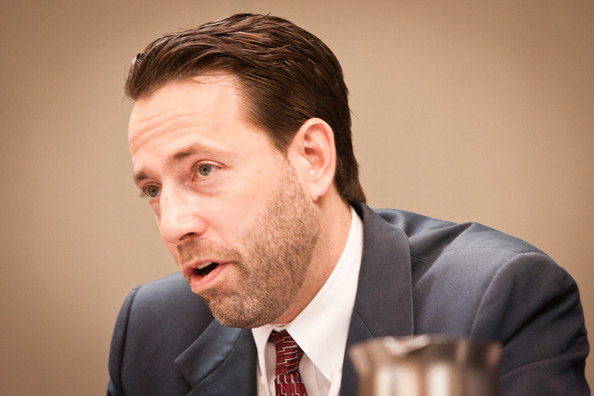
On the 26th of October, the AWAC and Rotary hosted a senatorial debate at the Dena'ina Center between candidates Joe Miller, Lisa Murkowski, and Scott McAdams. In total, 480 people attended the debate, including 105 students who came from APU, AVAIL, Chugiak, Service, South, UAA, and West. It was $23.oo for adults, and free for students thanks to B.P. This debate was moderated by the President of APTI, Steve Lindbeck, and the Executive Director of AWAC, Lise Falskow. To the left are some pictures from the debate.

Friday, August 21, 2009

Lecture and a Discussion!

Hello AWAC friends!

Here is an upcoming event that may be of interest to you folks. It is hosted by the UAA Bookstore, so go on and check it out!


Gypsy Theaters in the Soviet Union
On September 25, 2009, Professor Brigid O'Keeffe from Brooklyn College will host a lecture and discussion on the history of Gypsy theaters and entertainers in the Soviet Union. The paper is titled, "Pornography or Authenticity? Performing 'Gypsiness' on the Early Soviet Stage, 1921-1939." The event is open to the public and will take place at the UAA Campus Bookstore from 4-6PM.


So, to recap-

What: Lecture and Discussion


Topic: History of Gypsy Theaters in the Soviet Union

Location: UAA Bookstore (campus map)

Date&Time: September 25th, 4-6p.m.

Hope to see you all there!

Thursday, May 28, 2009

The World Trade Center of Alaska Presents Mark Begich Monday, June 1!

http://i242.photobucket.com/albums/ff266/alaskaworldaffairs/worldtradecenter-1.jpghttp://i242.photobucket.com/albums/ff266/alaskaworldaffairs/AWAClogo.jpg
The World Trade Center of Alaska in Cooperation with the Alaska World Affairs Council
and the Anchorage Economic Development Corporation,
the Associated General Contractors of Alaska,

the Northern Forum,
the Resource Development Council,
and the Alaska State Chamber of Commerce
present
a Major Address by the Honorable Mark Begich

http://i242.photobucket.com/albums/ff266/alaskaworldaffairs/senate.jpghttp://i242.photobucket.com/albums/ff266/alaskaworldaffairs/begich.jpg

Topic:
A Report from the Battlefield:
Progress in the Middle East and Washington

Just back from a week-long tour of Afghanistan and Pakistan, U.S. Senator Mark Begich will provide his perspective on progress in the world's most
dangerous region and give an update on current developments in Washington, D.C. As the first Alaskan on the Senate Armed Services
Committee since 1968, Senator Begich will report on his meetings with top military commanders and some of the thousands of Alaskan soldiers serving in the Middle East. In his first major speech in Alaska since his swearing-in, the Senator also will discuss congressional efforts to address the major issues facing the nation, including the economy, health care and international trade.

Monday, June 1, 2009
Hotel Captain Cook Ballroom
12:00 - 1:30 PM
(doors open at 11:30)

The cost is $45 per seat or $500 for a table of 10.

For more information or to make reservations,
please call the Alaska World Trade Center at 278-7233
or send an email to info@akwtc.org.

http://i242.photobucket.com/albums/ff266/alaskaworldaffairs/AEDC.jpg
http://i242.photobucket.com/albums/ff266/alaskaworldaffairs/AGCA.jpghttp://i242.photobucket.com/albums/ff266/alaskaworldaffairs/NorthernForum.jpg
http://i242.photobucket.com/albums/ff266/alaskaworldaffairs/RDC.jpg
http://i242.photobucket.com/albums/ff266/alaskaworldaffairs/chamberofcommerce.jpg

Wednesday, May 27, 2009

Susan Martin on Friday, May 29th

On Friday, May 29, the Alaska World Affairs Council will feature Susan Martin, of the Institute for the Study of International Migration at Georgetown University, speaking on the topic "US Immigration Policy: Challenges for the Future" as our last event of the 2008-2009 program year!

Susan Martin holds the Donald G. Herzberg Chair in International Migration and serves as the Director of the Institute for the Study of International Migration in the School of Foreign Service at Georgetown University. Dr. Martin is also Co-Director of the Certificate Program on Refugees and Humanitarian Emergencies. Previously Dr. Martin served as the Executive Director of the U.S. Commission on Immigration Reform, established by legislation to advise Congress and the President on U.S. immigration and refugee policy, and Director of Research and Programs at the Refugee Policy Group.

Her publications include Refugee Women, The Uprooted: Improving Humanitarian Responses to Forced Migration, Beyond the Gateway: Immigrants in a Changing America (ed.), and Managing Migration: The Promise of Cooperation. Dr. Martin earned her MA and Ph.D. in American Studies from the University of Pennsylvania and her BA in History from Douglass College, Rutgers University. She is the President of the International Association for the Study of Forced Migration and serves on the U.S. Comptroller General’s Advisory Board, the Academic Advisory Board of the International Organization for Migration, and the Board of the Advocacy Project.

Friday, May 15, 2009


On Friday, May 22nd, the Alaska World Affairs Council will feature Joe Montville,
Director of Toward the Abrahamic Family Reunion and Founder of Preventive Diplomacy at the Center for Strategic and International Studies.

Joseph Montville is director of Toward the Abrahamic Family Reunion, the Esalen Institute project to promote Muslim-Christian-Jewish reconciliation. He is also Senior Adviser on Interfaith Relations at Washington National Cathedral, and has appointments at American and George Mason Universities. Montville founded the preventive diplomacy program at the Center for Strategic and International Studies in 1994 and directed it until 2003. Before that he spent 23 years as a diplomat with posts in the Middle East and North Africa. He also worked in the State Department's Bureaus of Near Eastern and South Asian Affairs and Intelligence and Research, where he was chief of the Near East Division and director of the Office of Global Issues. Montville has held faculty appointments at the Harvard and University of Virginia Medical Schools. He defined the concept of “Track Two,” nonofficial diplomacy. Educated at Lehigh, Harvard, and Columbia Universities, Montville is the editor of Conflict and Peacemaking in Multiethnic Societies (Lexington Books, 1990) and editor (with Vamik Volkan and Demetrios Julius) of The Psychodynamics of International Relationships (Lexington Books, 1990 [vol. I], 1991 [vol. II]).

As always, you can find more information about our programs on our web site, www.alaskaworldaffairs.org.

On Friday, May 15th, we hosted Dr. Paul Dunscomb, Associate Professor of East Asian History at UAA, who spoke on the topic "Whatever Happened To Japan: The Economic Superpower That Never Was"

Paul Dunscomb is Associate Professor of East Asian History at the University of Alaska Anchorage, and Director of UAA’s Confucius Institute. He has graduate degrees from the State University of New York at Albany and the University of Kansas. He is a specialist in modern Japanese history focusing on the domestic political aspects of the Japanese intervention and occupation of Siberia, 1918-1922. His book manuscript on this topic, the first ever complete narrative of Japan’s Siberian Intervention in English or Japanese, is currently under consideration by the University of Hawaii Press. His work has appeared in the Military Review, the Journal of Japanese Studies, and East-West Connections. He is the recipient of a Fulbright Research Fellowship for study in Japan and co-recipient of a Fulbright-Hays Group Projects Abroad grant to lead a study tour of the Russian Far East. Prof. Dunscomb teaches East Asian Civilization, Modern China, Modern Japan as well as specialty courses in the evolution of the Samurai and the history of the Chinese Communist Party.

Wednesday, May 6, 2009

Dr. Julian Dierkes


On Friday, we will feature Dr. Julian Dierkes speaking on the topic "Fewer Children, More Customers? Changes in Japan's Supplementary Education System."

Julian Dierkes is an assistant professor and the Keidanren Chair in Japanese Research at the Institute of Asian Research of the University of British Columbia (UBC) where he teaches Asia Pacific Policy Studies At UBC, Julian serves as the Associate Director of the Centre for Japanese Research and as the Coordinator of the Program on Inner Asia.

His past and on-going research has examined portrayals of the nation in history education in postwar Japan and the Germanys. Julian's current research focuses on Japanese education, specifically on educational reform.

In this context he is investigating the impact of the for-profit nature of Japanese "shadow education" (juku) on the diversity of teaching and learning cultures within Japanese education.

In his research interests on Mongolia he focuses on the mining sector, especially on mining policy and on artisinal mining. Julian received his Ph.D. in sociology from Princeton University after previously studying at the Univ of California at Berkeley, Sophia University and the Free University of Berlin. He came to UBC in 2002 after holding the Daiwa Anglo-Japanese Foundation Fellowship at the University of Cambridge.

The program is at noon on Friday, May 6. Doors open at 11.30. The cost for lunch is $20 for members, $25 for non-members, and $6 for coffee. Students may eat lunch for free thanks to a grant from BP. Please email info@alaskaworldaffairs.org to make reservations!

Wednesday, April 29, 2009

Herb Meyer: "What's Going On In The World?"


Herb Meyer is an expert on international events and policies. He is the host and producer of an internationally best selling DVD entitled "The Seige of Western Civilization," which analyzes threats to America's security, economy, and culture. He has served under the Reagan administration in the CIA, and was awarded the U.S. National Intelligence Distinguished Service Medal after his forecast of the Soviet collapse. He is currently working on a book, How to Analyze Information: a Step-by-Step Guide to Life's Most Important Skill

Meyer's many experiences with international intelligence will make for a very exciting, timely speech relevant to the concerns of Alaskans and the world. We look forward to a very interesting program this week! It is also our annual board elections; if you are member in good standing please don't forget to come and vote! There are several incumbents as well as newly applying board members, and you can help us make a difference in the Council. We will see you at the Hilton Chart Room at 11:30 am this Friday, May 1st! Please RSVP to 276-8038 or info@alaskaworldaffairs.org. Lunch program is $20 for members, $25 for nonmembers, and coffee is $6. See you there!

Follow us on Twitter! AKWorld.

Monday, April 20, 2009

Patrick Yack's presentation


Last Friday, the World Affairs Council welcomed over 80 people for a program by Patrick Yack. We were back in the newly renovated Chart Room on the top floor of the Hilton, our usual spot. The last few months have given the room a new shine, and we were glad to be back. Patrick Yack, Atwood Chair of Journalism at UAA, was our speaker. He's held many prestigous journalism and editor positions around the country, and reported from around the globe. Yack's main point was the ever-changing journalism industry and the quality of news that comes from the many media systems we have today.
"The 24-hour news turnaround has become the 24-second."

With the prevalence of at-your-fingertips news sources such as Google Alerts and Twitter, there isn't time for journalists to draft stories. The goal for new and emerging journalists, Yack said, is to have them be as versatile and efficient as possible, and adept at all the different sources of journalism.
While these new forms of news are not necessarily bad, they do run soem risks. Anyone can sign up to write a blog, and there is no way to check soemone's credibility on the Internet. Yack stressed the importance of using legitimate new sources to gain information.
Yack's speech was quick and to the point, allowing lots of time for question-and-answer with the audience. Questions crossed a wide number of topics relating to foreign journalism, the internet news sources, and more. We enjoyed Yack's knowledge on this timely and relevant issue, as all our lives are changing because of it.

Join us this week for Dr. Joseph Ha, Vice President for International Business and Government Relations for Nike Corporation. His speech topic is "Points of Conflict and Cooperation between the United States and China."

--Chloe Miller