Monday, October 8, 2012

U.S. Energy and Tax Policies: Implications for Alaska's Economy

Dr. Margo Thorning is an internationally recognized expert on tax, environmental, and competitiveness issues and has testified as an expert witness on capital formation and environmental issues before various U.S. congressional committees. Dr. Thorning is senior vice president and chief economist with the American Council for Capital Formation and director of research for its public policy think tank.

Dr. Thorning writes for numerous online and in print publications. Below is an excerpt from a piece she wrote for the National Journal:

“Without question, the U.S. needs to do everything it can to promote domestic energy, especially oil and gas, to help meet our future population demands. And don't forget that enhanced energy production means an enhanced job market. Energy-producing states including Texas, Oklahoma, Montana, Wyoming, North and South Dakota and Nebraska are seeing impressive income and job growth gains mostly attributed to the growing demands for their robust commodities, including oil and gas. Allowing the Keystone Pipeline would also enhance our energy supply and create more jobs. We should also allow companies export our robust supplies of natural gas.

The private sector is already making strides in new business models that accommodate changes in climate and weather patterns through "no regrets" solutions (or changes that would be undertaken in the normal course of business). Examples of this might include companies that are developing more drought-resistant seeds or hardening coastal infrastructure at risk from sea level rise.

To promote more energy production and more "no regrets" business solutions, we need a tax code that retains robust capital cost recovery. Tax provisions including accelerated and bonus depreciation, Last In First Out (LIFO) and Section 199, and provisions utilized by the oil and gas industry which are all on the table as potential eliminations as a trade-off for reductions in lowering corporate tax rates should be preserved.

Finally, we need reductions in regulatory and permitting barriers that are often factors hindering U.S. companies from making investments to improve or expand their facilities. For example, in addition to permits to meet federal regulations there are often additional state and local permit requirements, which add time and cost to a project getting underway. Environmental regulations should meet a cost/benefit test--those that have minimal environmental impact but place a chokehold on businesses should be eliminated.”

Clearly, Dr. Thorning’s expertise and recommendations concerning tax and energy policy is extremely relevant to Alaska’s own energy and development issues. To learn more from Dr. Thorning in person about how the U.S. government’s tax and energy policies will be affecting Alaska’s economy, attend our luncheon on Friday, September 21st, at noon in the Anchorage Hilton Hotel.

If you are interested in attending, we strongly suggest that you RSVP to us by Wednesday October 24th. Admission is $23 for members, $26 for non-members if paid in advance, and $26 for members, $30 for non-members if paid at the door. All students are free, as are UAA staff and faculty. To pay in advance, click here.

If you would like to pay at the door, you can still RSVP by sending us an email (info@alaskaworldaffairs.org) or by giving us a call (907-276-8038).

Monday, September 24, 2012

Stories of Struggle, Stories of Hope: Art, Politics, and Human Rights


A topic that is not often discussed at the Alaska World Affairs Council’s typical events is that of our common humanity. What, though, is more worldly and more related to our international relationships than that which unites us? In his TED Talk (which can be viewed below), Chris Abani discusses what makes up our humanity, and how the people he has known in his life have taught him the importance of the human relationship.


Chris Abani is a Nigerian poet and novelist. As a young man, Abani wrote a spy novel about a foiled coup that incidentally mirrored a real-life attempted coup against the Nigerian government. Accused of laying out the blueprint for the attempted coup, Abani was imprisoned in Nigeria at the age of 18. Although he was released, he was later arrested and tortured twice more. Abani directs his experiences into his writing, resulting in “searing poetry” and poignant novels, all the while maintaining an optimistic view on life.

During his lecture on October 5th, which is sponsored by UAA Student Activities, Chris Abani will be discussing human stories of struggle and hope, and how art, politics, and human rights intertwine. The lecture will be held on at 7:30 p.m. in the UAA Student Union Den. Admission is free for all, and there is no need to RSVP.

For more information, visit the event’s facebook page.

Friday, September 21, 2012

Is the End of Poverty in Sight?


On September 21st, Dr. John Hatch discussed FINCA,  the organization he founded, and the use of microfinance as a tool to end poverty. Dr. Hatch was optimistic, despite the great challenges that we face; although his talk was entitled “Ending Poverty by 2040,” Dr. Hatch strongly believes that the deadline is actually quite generous, and that at the rate that microfinance is growing, poverty could be ended as soon as 10 or 15 years from now. Currently, microfinance helps 160 million families, which translates to about 800 million individuals, and this number is growing by about 10% per year. As Dr. Hatch put it, microfinance is “too big to fail, and it’s run by the people themselves.”

During his talk, Dr. Hatch also emphasized the importance of the bottom-up (versus top-down) approach. When an initiative is created from the bottom up, it involves individuals and creates a greater sense of ownership and accountability. Consequently, many groups become self-sufficient and no longer rely on grants to continue their work. The sustainability and potential longevity of these programs means that they can have more long-lasting effects on individual clients.

For more information about our future events, visit our website at www.alaskaworldaffairs.org. If you missed Dr. Hatch’s lecture, a podcast version should be available on the KSKA website shortly.

Tuesday, September 11, 2012

The End of Poverty by 2040

Village Banking Group Africa
Photograph from www.finca.org

Dr. John Hatch has a PhD in Economic Development and is the founder of FINCA  (the Foundation for International Community Assistance), a micro-finance organization that uses village banking as its model. Dr. Hatch is credited with creating the village banking model, which has served as a example for micro-finance organizations all over the world. He also served as FINCA's president and director of research during his 22 years with the organization.

Below is an excerpt from FINCA’s website (www.finca.org) explaining the village banking model, which is unique because it promotes individual empowerment and encourages financial responsibility by emphasizing community relationships.

“The Village Banking method is the form of microlending that FINCA pioneered. It is economic democracy in action. A Village Banking group is a support group of 10-50 members—usually mothers—who meet weekly or biweekly to provide themselves with three essential services:
  • small self-employment loans-–as small as $50 or $100--to start or expand their own businesses
  • an incentive to save, and a means of accumulating savings
  • a community-based system that provides mutual support and encourages personal empowerment.
Village Banking group members guarantee each others’ loans and run a democratic organization. The group guarantee is important, since borrowers don’t have the kind of collateral a commercial bank would be seeking to lend them money. Groups represent grassroots democracy in action; members elect their own leaders, design their own bylaws, keep the books, manage the funds, and are fully responsible for loan supervision, including enforcing penalties for non-compliance.”

Dr. Hatch will be addressing how the village banking model and micro-finance in general can be used as a means to end poverty around the world. With his expertise and lifetime of experience, it is sure to be an enlightening luncheon.

For a full biography of Dr. John Hatch, please visit our website.


Dr. Hatch will be speaking on Friday, September 21st, from noon to 1p.m. If you are interested in attending, we strongly suggest that you RSVP to us by Wednesday, September 19th. Admission is $23 for members, $26 for non-members if paid in advance, and $26 for members, $30 for non-members if paid at the door.
To pay in advance, click here. If you would like to pay at the door, you can RSVP by sending us an email (info@alaskaworldaffairs.org) or giving us a call (907-276-8038). 

The session will be moderated by Eric McCullum, an Alaskan businessman.

Friday, August 31, 2012

Priya Guha: The Changing Face of the Diplomat

Traditionally, foreign representatives have fit a particular mold and seemingly come from similar backgrounds. This pattern is changing and opportunities for foreign service is widening as the face of the foreign diplomat diversifies. We heard about this last week, when Dr. Dino Patti Djalal, the Indonesian Ambassador to the U.S., shared his story with us. During his lecture, he told us  that his first job in the U.S. was as the janitor in the embassy where he would one day work as ambassador, but then he didn’t think it was possible. At that time, Indonesian ambassadors were required to have military rank, something Dr. Djalal lacked. However, because the opportunities and requirements changed, Dr. Djalal was able to rise to the position of ambassador.

Similarly, though perhaps less explicitly, the face of representation from the UK has conformed to a certain idea of the traditional diplomat. In an increasingly diverse world, however, this is changing. Priya Guha was appointed as the first woman Consul General of San Francisco in August 2011, changing the face of traditional British representation. Guha is also half Indian; she represents both the multi-generational British citizen as well as the second-generation daughter of an immigrant. Guha, on several different levels, knows what it means to be a diplomat representing a diverse society and personal background. 


From 2007 to 2011 Guha served as First Secretary for Political and Bilateral Affairs, leading on Indian politics and the UK-India bilateral relationship. As the Consul General in San Francisco, she represents the British government’s foreign policy interests in several states including northern California, Washington,Oregon, Idaho, Montana, and Alaska.

Priya Guha will be speaking on Friday, September 7th at noon at the Anchorage Hilton Hotel. Price for lunch if paid in advance is $23 for members, $26 for non-members. If paid at the door, lunch is $26 for members, $30 for non-members. You can register through our website: http://www.alaskaworldaffairs.org/September72012PriyaGuha/tabid/467/Default.aspx

Monday, November 1, 2010

A 2010 Senatorial Debate!


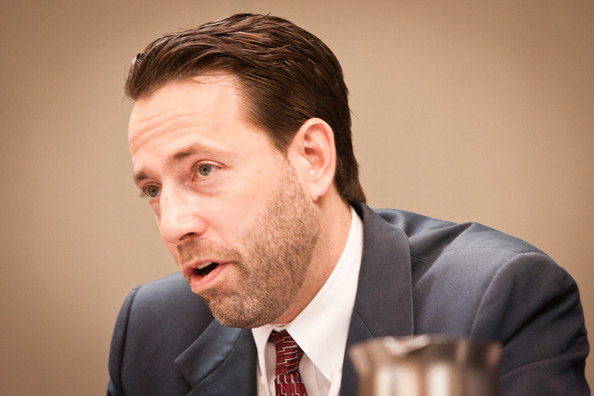
On the 26th of October, the AWAC and Rotary hosted a senatorial debate at the Dena'ina Center between candidates Joe Miller, Lisa Murkowski, and Scott McAdams. In total, 480 people attended the debate, including 105 students who came from APU, AVAIL, Chugiak, Service, South, UAA, and West. It was $23.oo for adults, and free for students thanks to B.P. This debate was moderated by the President of APTI, Steve Lindbeck, and the Executive Director of AWAC, Lise Falskow. To the left are some pictures from the debate.

Friday, August 21, 2009

Lecture and a Discussion!

Hello AWAC friends!

Here is an upcoming event that may be of interest to you folks. It is hosted by the UAA Bookstore, so go on and check it out!


Gypsy Theaters in the Soviet Union
On September 25, 2009, Professor Brigid O'Keeffe from Brooklyn College will host a lecture and discussion on the history of Gypsy theaters and entertainers in the Soviet Union. The paper is titled, "Pornography or Authenticity? Performing 'Gypsiness' on the Early Soviet Stage, 1921-1939." The event is open to the public and will take place at the UAA Campus Bookstore from 4-6PM.


So, to recap-

What: Lecture and Discussion


Topic: History of Gypsy Theaters in the Soviet Union

Location: UAA Bookstore (campus map)

Date&Time: September 25th, 4-6p.m.

Hope to see you all there!